The Maps Embed Strategy That Actually Moves the Needle for Local Shops
The Maps Embed Strategy That Actually Moves the Needle for Local Shops
In the world of local search, most business owners and even many SEO “experts” treat the Google Map embed as a decorative afterthought – a simple widget tossed onto a contact page so customers can find the front door. But if you’re looking at it that way in 2025 and 2026, you’re missing one of the most potent ranking signals available. As a Google Business Profile Product Expert, I’ve seen firsthand how small technical shifts in how we handle location data can make or break a local campaign.
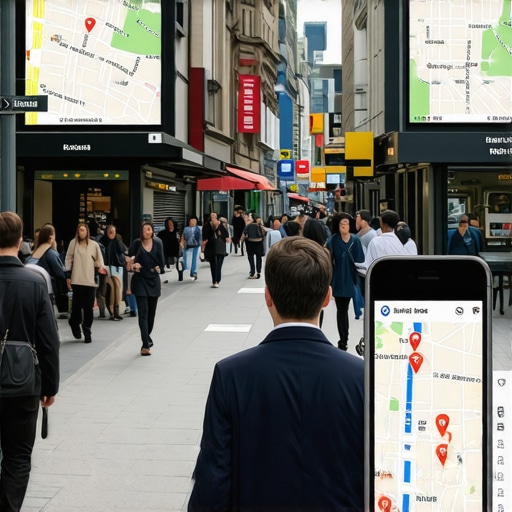
We need to stop thinking of maps as static images and start seeing them as the bridge between your digital presence and your physical reality. The data doesn’t lie: 80% of local searches result in conversions, and the majority of those conversions happen within the “Map Pack.” If you aren’t visible there, you don’t exist for the vast majority of your potential customers. Recent research from SearchPilot revealed a staggering 7% drop in organic traffic for local pages when map components were removed. This proves that Google isn’t just looking for your address in text; it is looking for the technical verification of your entity through a map embed.
Why Google Map Embeds Are More Than Just a “Contact Page” Widget
At its core, google business profile seo is about building trust with an algorithm. Google’s primary goal is to provide users with the most relevant, prominent, and geographically proximate result. These are the three pillars of local SEO: Proximity, Relevance, and Prominence. A properly implemented map embed touches every single one of these pillars.
From a technical standpoint, an embed is a direct signal to Google’s crawler that verifies the physical existence of your business. When you embed a map from your official Google Business Profile (GBP), you aren’t just showing a map; you are creating a digital handshake between your website and Google’s own database. This “Location Signal” tells the algorithm that the business mentioned on the page is the exact same entity verified in the Google Maps ecosystem. This alignment of intent is crucial for google business profile optimization.
Furthermore, using professional local seo tools allows us to see that pages with embedded maps often have higher “dwell time.” Users interact with the map, zoom in, check the commute, or look at nearby landmarks. These user signals indirectly tell Google that your page is helpful, which boosts your overall authority. In 2026, Google’s AI-driven search results (SGE) are even more reliant on these verified entity connections to ensure they aren’t recommending “ghost kitchens” or lead-gen spam sites.
The SearchPilot Evidence: What Happens When You Remove the Map?
We often talk about what to add to a site, but we rarely discuss the consequences of removal. A landmark case study by SearchPilot provided the industry with definitive proof of the map’s power. They conducted a split test on a series of local landing pages where the map component was removed to “clean up” the design and improve page speed. The result? A statistically significant 7% loss in organic traffic.
Why did this happen? It’s because the map component helps pages rank for a wider range of “near me” queries. When the map was gone, the “geographical relevance” signal weakened. Google could still read the address in the text, but the interactive, API-driven confirmation of that location was missing. This is a critical lesson for anyone trying to rank google business profile listings in competitive markets. If you want to stay in the game, the map is a non-negotiable requirement for your local landing pages.
This study highlights that the map isn’t just for the user; it’s for the crawler. Without that embed, your page loses its “hyper-local” context, making it harder for Google to confidently place you in the top three results for users searching from only a few blocks away.
Where to Embed: Moving Beyond the Contact Page
Most people stop at the Contact Us page. That is a mistake. To truly leverage this strategy, you need to think site-wide and contextually. Here is where we recommend placing your embeds for maximum impact:
1. The Footer
Following the insights from Black Pug Studio, consistent NAP (Name, Address, Phone) data in the footer combined with a map embed is a baseline requirement for 2025. By placing a small, responsive map in your footer, you are providing a site-wide location signal. Every single page on your site now reinforces your physical location to Google’s indexers.
2. Service Area Pages
If you are a plumber, roofer, or HVAC technician, you likely serve multiple towns. A common mistake is using the same map of your office for every service page. Instead, you should embed a map of the service area. Google allows you to define service areas in your GBP; embedding a map that highlights these boundaries on your specific service pages helps Google understand the “Proximity” pillar of your business beyond just your office pin.
3. City Landing Pages
City landing pages are often the target of “spam” filters because they can feel repetitive. To combat this, you must use hyperlocal SEO. Embedding a map of the specific city or neighborhood on these pages – ideally with custom pins for local projects – proves to Google that you aren’t just a national brand “carpet bombing” keywords. For more on this, check out our guide on why your city pages feel like spam to search engines.
4. Press Releases & Guest Posts
There is a lot of debate on Reddit and in SEO forums about embedding maps in off-site content. While you don’t want to overdo it, high-authority embeds in a local press release can build significant google business profile authority. It creates a backlink profile that is geographically anchored, which is far more valuable for local shops than generic links from unrelated blogs.
Technical Implementation: The “Perfect” Embed Checklist
Not all embeds are created equal. If you simply take a screenshot of a map and upload it, you gain zero SEO benefit. You need the live, interactive element. Follow this step-by-step guide to ensure your implementation is flawless:
- Step 1: Use the Official Share Code: Go to Google Maps, search for your business by name (not just the address), click “Share,” and then “Embed a map.” This ensures the map is linked to your specific CID (Customer ID) and Business Profile.
- Step 2: Ensure NAP Consistency: The text surrounding the map must match your Google Business Profile exactly. If your GMB says “St.” and your website says “Street,” fix it. Consistency is the key to local map pack seo.
- Step 3: Add LocalBusiness Schema (JSON-LD): This is the secret sauce. You should place Schema.org markup on the same page as the map. This structured data tells the search engine exactly what the map represents in a language it understands perfectly.
- Step 4: Optimize for Mobile Responsiveness: Most local searches happen on mobile. If your map breaks the layout or slows the page to a crawl, your bounce rate will spike. Use CSS to ensure the map scales correctly.
To monitor how these technical changes affect your visibility, we recommend using a google maps rank tracker. This allows you to see if your “map pack” position improves as your site-wide signals strengthen.
Advanced Strategy: The Hyper-Local Content Loop
If you want to truly dominate your market, you need to pair your map embeds with hyper-local content. This is what we call the “Content Loop.” Instead of just writing a blog post about “How to Fix a Leaky Pipe,” write a post about “Fixing a Leaky Pipe in the [Neighborhood Name] Historic District.”
Within that post, embed a map that shows the neighborhood or the specific street where the work was done. This creates a hyper-local relevance signal that is impossible for national competitors to replicate. By targeting three blocks away, you can often rank higher for “near me” queries in that specific zone than you would for a broader city-wide search. This strategy is essential for google maps lead generation because it positions you as the local authority right in the customer’s backyard.
Common Pitfalls: Why Your Map Embed Isn’t Working
Sometimes, we see businesses implement maps and see no movement in their gmb ranking service metrics. Usually, this is due to one of three things:
- Core Web Vitals Issues: Maps are heavy. If not lazy-loaded, they can tank your page speed scores. Use a GMB ranking tools suite to audit your site speed and ensure the map isn’t hurting your overall user experience.
- Broken API Keys: If you are using a custom Google Maps API implementation rather than a simple iframe, ensure your billing is up to date and the API key isn’t restricted incorrectly. A “Development Purposes Only” watermark is a trust-killer.
- The “Hidden Map” Error: Don’t hide your map behind a tab or a “click to expand” button. Google’s crawlers are getting better at reading hidden content, but for the strongest signal, the map should be visible on page load (or lazy-loaded into the viewport).
Conclusion: Dominating the 2026 Local Map Pack
The map embed is the bridge between the digital search and the physical door. It is the definitive proof Google needs to verify your business’s relevance and proximity to the user. By moving beyond the contact page, ensuring technical perfection, and utilizing local seo software, you can secure your spot in the most valuable real estate in search.
If you’re ready to stop guessing and start growing, it’s time to audit your location signals. Whether you need a comprehensive google maps ranking service or a custom maps seo campaign, focusing on these technical embeds will help you rank higher on google maps and turn searchers into long-term customers.