The one setting that stops plumbers from ranking in the map pack top 3
The one setting that stops plumbers from ranking in the map pack top 3
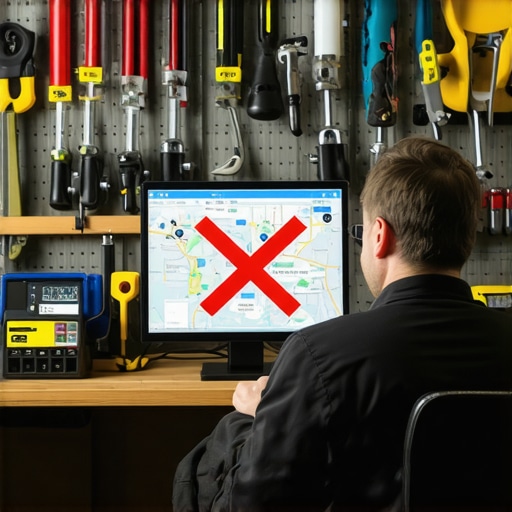
You have 150 five-star reviews. Your trucks are wrapped, your technicians are the best in the city, and your website is fast. Yet, when a homeowner in a high-value neighborhood five miles away searches for “emergency plumber near me,” you are nowhere to be found. Instead, the Google Local 3-Pack is showing a “newbie” with 12 reviews and a half-finished website.
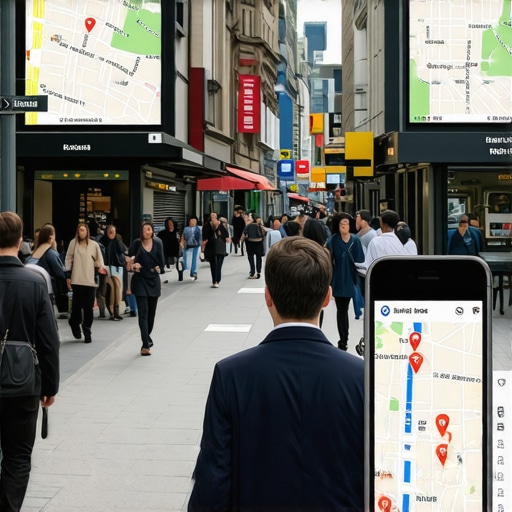
It’s infuriating. It’s also the reality of the 2026 local search landscape. In a world where “near me” searches have surged by over 200%, being the best plumber in town doesn’t matter if Google’s algorithm thinks you’re too far away or, more accurately, if your profile settings are telling Google you don’t have a “home base.”
If you are currently sitting at rank #4, #5, or #10, you are effectively invisible. Statistics show that the top three results in the Map Pack capture over 70% of the clicks. If you aren’t in that “Golden Trio,” you are fighting for the scraps. Most plumbing SEO advice will tell you to “get more reviews” or “write more blog posts.” While those things help, they won’t fix the map mistake costing plumbers thousands in new business: a fundamental misunderstanding of the Service Area Business (SAB) settings.
The “Service Area Trap”: The Setting That Kills Rankings
For years, plumbers have been told that since they go to the customer, they should hide their home or office address and simply “set their service areas” in the Google Business Profile (GBP) dashboard. On the surface, this makes sense. You don’t want customers showing up at your house or your warehouse at 2 AM looking for a water heater.
However, this has led to what industry experts call the “Service Area Trap.” Many plumbers, in an attempt to capture as much territory as possible, select 20 or even 30 different cities and counties in their GBP settings. They believe that by telling Google, “I service these 30 areas,” Google will show them to customers in all 30 areas.
This is a ranking killer.
Following the March 2026 Core Update, Google’s algorithm has become significantly more aggressive in penalizing “diluted relevance.” Research from Mammoth Marketing on the “Service Area Trap” indicates that when a business hides its physical address and selects a massive, sprawling service area, Google loses the “anchor” of the business. Instead of being a dominant force in one specific neighborhood, the business becomes a “maybe” in thirty neighborhoods. In the eyes of the algorithm, a “maybe” never makes the Top 3.
When you use google business profile optimization techniques correctly, you realize that proximity is the #1 ranking factor. By “spreading” your service area too wide in the settings, you are effectively telling Google that you have no central location. In the 2026 environment, Google prioritizes businesses with a clear, verified physical proximity to the searcher. If your settings are “diluted,” you will lose every time to a competitor who has a verified physical address near the searcher’s location, even if that competitor has fewer reviews and a worse reputation.
The 2026 Proximity Skew & The March Core Update
We are currently living through what many are calling “Google’s 2026 Local SEO Crackdown.” The landscape has shifted dramatically. One of the most shocking data points from the last six months is that local pack ads have surged by 733%. As Google monetizes more of the Map Pack, the organic space for plumbers is shrinking. You are no longer competing for three spots; often, you are competing for two organic spots and one “Sponsored” spot.
The March 2026 Core Update specifically targeted keyword stuffing in GBP names and, more importantly, businesses that were abusing the Service Area settings to appear in cities where they had no physical presence. Google’s “Proximity Skew” has been weighted 40% heavier in this update. This means that if you are 5.1 miles away and your competitor is 4.9 miles away, and you have your service area set to “the entire state,” Google is going to favor the closer competitor who has a tightly defined service radius.
Another hidden setting that impacts this is your “Business Hours.” For emergency plumbers, there is a common debate: Should you set your hours to 24/7? While it seems like a customer-service choice, it is actually a ranking signal. During off-hours (like 3 AM), Google filters out businesses that are marked as “Closed.” If you are an emergency plumber but your GBP says you close at 5 PM, you vanish from the maps at 5:01 PM. However, simply checking the 24/7 box isn’t enough; you must have the “Review Velocity” and “Signal Strength” to back it up, or Google will flag the profile for “Suspicious Activity.”
You have to ask yourself: Does your local SEO service handle 2026 proximity skews? If they are still using 2022 tactics, they are likely the reason your phone has stopped ringing.
The “Review Velocity” Secret
Most plumbers think that if they have 500 reviews and their competitor has 100, they should automatically rank higher. This is a myth. Google doesn’t just look at the total number of reviews; it looks at Review Velocity and Recency.
Review Velocity is the speed at which you acquire new reviews. If you got 400 reviews three years ago and only 2 reviews in the last month, Google views your business as “stale.” Meanwhile, if your competitor is getting 5 reviews every single week like clockwork, Google’s algorithm sees them as the more “active” and “relevant” choice for a user today.
To dominate the Map Pack, you need to use a google business profile audit tool to analyze your competitors’ velocity. If the top-ranked plumber in your city is getting 10 reviews a month, you need to be getting 12. It’s a mathematical arms race. This constant flow of fresh data tells Google that you are still in business, still providing excellent service, and still the best choice for the “Near Me” searcher.
This is exactly how we fixed the common HVAC ranking error that kills local phone calls for our mechanical contractor clients. We shifted the focus from “total reviews” to a consistent, automated review acquisition strategy that keeps the velocity high and the signals fresh.
Step-by-Step: Reconfiguring Your Profile for the Top 3
If you want to break out of the #4 spot and into the Top 3, you need to stop treating your GBP like a static yellow pages ad and start treating it like a precision instrument. Follow these steps to reconfigure your profile for the 2026 algorithm:
Step 1: Audit Your Primary Category
Are you listed as “Plumber” or “Emergency Plumber”? Or perhaps “Drainage Service”? In 2026, Google’s sensitivity to categories is at an all-time high. If most of your high-ticket leads come from “water heater repair,” but your primary category is “Septic System Service,” you are fighting an uphill battle. Use an audit tool to see which category the Top 3 performers in your specific neighborhood are using as their Primary category.
Step 2: Tighten the Service Area Radius (The 9-Mile Rule)
This is the “One Setting” mentioned in the title. If your service area is set to “Florida” or even “Miami-Dade County,” you are likely suffering from diluted relevance. Case studies from major metropolitan areas have shown that the “9-mile rule” is often the sweet spot. When a plumber restricts their service area settings to a 9-10 mile radius from their actual physical point of operation (even if that address is hidden), their “Local Authority” score spikes. Google begins to see them as a “Hyper-Local Expert” rather than a “Generalist Wanderer.”
Step 3: Track the “Map Pin” Movement
You cannot manage what you do not measure. Use local seo tools to track your rankings on a grid. A standard ranking report that tells you “You are #2 in Chicago” is useless. You need a grid that shows you are #1 on 5th Street, but #8 on 12th Street. This allows you to see exactly where your “Proximity Bubble” ends, so you can adjust your service area settings to match reality.
Step 4: The Strategic Satellite Office Dilemma
If you want to rank in a city 20 miles away, the “Service Area” setting will not get you there in 2026. The algorithm is too smart. You have two choices: accept that you won’t rank in the Top 3 for that city, or open a “Strategic Satellite Office.” This doesn’t mean a P.O. Box (which will get you suspended instantly). It means a legitimate, staffed (even if part-time) physical location that can pass a Google Video Verification. For a plumber, a small warehouse space or a shared office with a dedicated entrance is often enough to “anchor” a new proximity bubble.
Conclusion: The Path to Lead Dominance
The “Service Area” setting in your Google Business Profile is not a wishlist. It is a proximity toggle. If you treat it like a wishlist – adding every city within a 50-mile radius – you are essentially telling Google to ignore you. In the hyper-competitive world of plumbing and HVAC, where every click can lead to a $10,000 repipe job, you cannot afford to be invisible.
To win in 2026, you must embrace the reality of the Proximity Skew. Tighten your service areas, increase your review velocity, and ensure your primary categories are perfectly aligned with your most profitable services. The plumbers who understand the technical nuances of unlocking the power of local SEO services for business growth are the ones who will own the market.
Don’t let a single checkbox in your dashboard be the reason your competitors are getting the calls you deserve. Audit your profile today, fix your service area trap, and rank google business profile where it belongs: in the Top 3.