The map ranking audit that exposed our top competitor’s strategy
The Map Ranking Audit That Exposed Our Top Competitor’s Strategy
It is a scenario I see all too often in my work as a local SEO specialist. A client comes to me with a look of pure frustration. They have been in business for twenty years, they have 150 five-star reviews, and their office is right in the heart of the city. Yet, when they search for their primary service, they are stuck at the #4 spot – just outside the “Local 3-Pack” – while a competitor with 40 reviews and a smaller office is sitting comfortably at #1. This is where google business profile seo moves from a “nice to have” to a survival necessity.
Recently, we conducted a deep-dive investigation to solve this exact riddle. We knew that simply “having a profile” wasn’t enough. As Rashid Rehman’s research suggests, “Local SEO isn’t marketing; it’s infrastructure.” If your digital infrastructure is crumbling or outdated, no amount of traditional advertising will fix your visibility issues. Through a systematic google business profile audit, we didn’t just find out what was wrong with our client; we exposed the precise “infrastructure” the competitor had built to dominate the map.
The reality is that even the most seasoned digital marketers often spend hours manually digging through search results because Google provides very little transparent competitor data. To win in 2026, you have to stop guessing. You need to look at the data points that Google actually weights. Our audit revealed that the gap between #1 and #4 wasn’t luck – it was a calculated execution of relevance, distance, and prominence that we were finally able to deconstruct.
The Local Algorithm Breakdown: Why They Outrank You
To understand how to rank higher on google maps, you must first understand the three pillars of the local algorithm: Relevance, Distance, and Prominence. However, most business owners misunderstand how these are weighted. In our audit, we utilized data-driven benchmarks to see where the competitor was pulling ahead. By 2026 standards, the weights have shifted significantly toward profile-specific signals.
- GBP Signals (30-35%): This is the foundation. It includes your primary category, keywords in the business title (though this is a risky game), and the completeness of your profile.
- Proximity (20-25%): This is the “Distance” factor. While you can’t move your building, you can influence how far your “ranking radius” extends.
- Reviews (15-20%): This isn’t just about the number of stars; it’s about the text within the reviews and how often they are posted.
In our investigation, we found that proximity has a “ceiling.” If you are 50 miles away, you likely won’t rank for a local search. However, within a 5-10 mile radius, Relevance and Prominence are the variables you can actually control. Our competitor wasn’t closer to the searcher; they were simply more relevant in the eyes of the algorithm. To fix this, we looked at local seo tools that could measure these signals in real-time, allowing us to see the “invisible” factors the competitor was leveraging.
If you feel like you’ve hit a wall, it’s likely because you’re focusing on the 20% (Review count) while ignoring the 35% (GBP infrastructure). To get back on track, you might need to look into 7 simple moves to jump ahead of your biggest local competitor to reset your baseline.
The “Aha!” Moment: Category Sabotage
The first major discovery of our audit was what I call “Category Sabotage.” Most businesses set their primary category once and never look at it again. Our client was listed under a broad category, “Legal Services.” Their competitor, however, had performed extensive google business profile optimization by selecting the hyper-specific primary category “Personal Injury Attorney.”
Data from BrightLocal research has consistently shown that choosing the most specific primary category is the single most impactful “on-page” change you can make for a GBP. When Google sees a search for “car accident lawyer,” it will almost always prioritize a profile with the primary category of “Attorney” or “Personal Injury Attorney” over a generic “Legal Services” profile, even if the generic profile has more reviews.
During our audit, we also noticed the competitor was utilizing a strategic mix of secondary categories. They weren’t just an attorney; they had secondary categories for “Trial Attorney” and “Law Firm.” This expanded their “keyword net” without diluting their primary relevance. This is a classic example of The Hidden Category Tweak That Puts Your Shop at the Top of Search. By aligning the client’s categories with the competitor’s successful blueprint, we saw a ranking jump of two positions within just ten days.
Review Velocity vs. Review Count: The 2026 Myth
One of the biggest myths in local SEO is that the person with the most reviews wins. Our audit thoroughly debunked this. Our client had 150 reviews, while the competitor had 40. On paper, the client should have won. But when we looked at the “Review Velocity” and “Review Recency,” the story changed.
The competitor was receiving an average of 3 new reviews per week. Our client, despite having a massive total, hadn’t received a new review in over three months. In 2026, Google’s algorithm views a stagnant profile as a potential “closed” or “inactive” business. High review velocity signals to Google that the business is currently active, popular, and providing a good customer experience right now.
Furthermore, the competitor’s reviews were “keyword-rich.” Customers weren’t just saying “Great job!”; they were saying “Great personal injury lawyer in downtown Chicago.” These keywords within the review text act as relevance signals that help you rank google business profile higher for those specific terms. This is a core reason Why 5-Star Reviews Alone Aren’t Moving Your Map Rank. You need a consistent google review strategy that encourages customers to mention specific services and locations.
The Geo-Grid Scan: Mapping the Ranking Radius
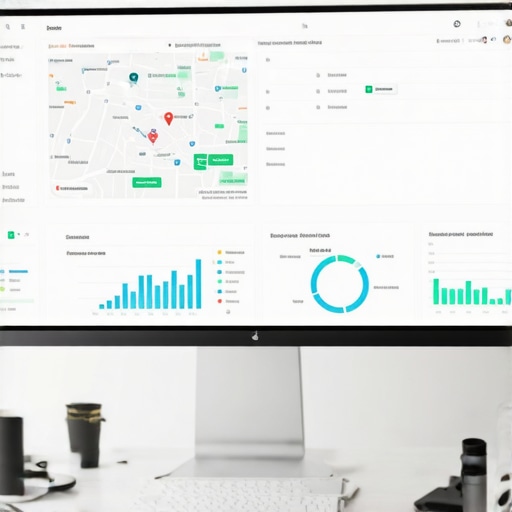
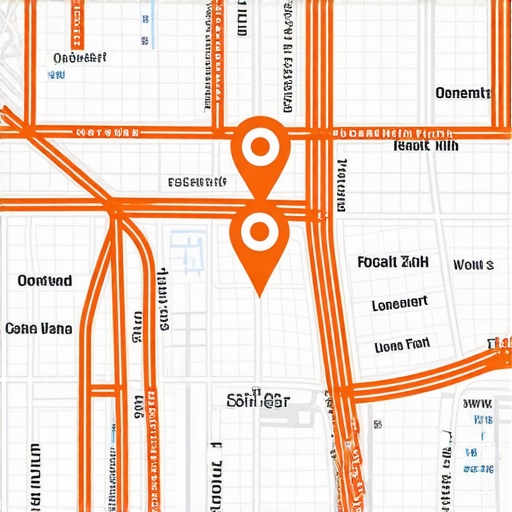
To truly expose the competitor’s strategy, we had to visualize where they were winning. We used a google maps rank tracker to perform a geo-grid scan. A geo-grid scan shows you exactly where your business ranks at specific GPS coordinates across a city. It’s essentially a “ranking heat map.”
What we found was fascinating. The competitor wasn’t ranking #1 everywhere. They had a “stronghold” in a specific 3-block radius where they were also running highly targeted local citations seo campaigns. They had built local relevance by getting mentioned on neighborhood-specific blogs and local directory sites that our client had ignored. This hyperlocal focus allowed them to dominate the map pack in the most high-value areas of the city.
By using a google business profile audit tool like SEO Viper Tools, we were able to see that our client’s ranking dropped off significantly just two miles from their office, whereas the competitor’s “green zone” (ranking positions 1-3) extended for nearly five miles. This revealed that our client needed to stop focusing on the whole city and start winning block-by-block. For those looking to scale this process, a A 3-Step Maps SEO Package Audit for Your 2026 Budget can help allocate funds to these technical geo-grid analyses.
Active Signals: Photos, Q&A, and Posts
The final piece of the competitor’s strategy was their use of “Active Signals.” A Google Business Profile is not a static billboard; it is a living document. The audit showed that the competitor was updating their profile at least three times a week. They weren’t just doing this for the sake of it; they were feeding the algorithm fresh data.
The competitor’s strategy included:
- Google Business Profile Posts: They used posts to announce weekly offers and share “behind the scenes” photos. These posts are indexed by Google and contribute to your overall relevance.
- Owner-Generated Q&A: They didn’t wait for customers to ask questions. They populated their own Q&A section with common queries like “Do you offer free consultations?” and “Where is the best place to park?”
- Geo-Tagged Photos: They regularly uploaded new photos of their team and office. In 2026, Google’s AI (Vision AI) can actually “read” what is in your photos to verify your business type and location.
These active signals prove to Google that the business is operational. If your profile is a ghost town, your rankings will eventually reflect that. This is why many businesses are now turning to a professional gmb optimization service or google maps optimization service to handle the daily maintenance of these signals. If you’ve noticed a dip in performance lately, it might be because Why Your 2025 SEO Plan Stopped Working in 2026 (Fix) is likely tied to a lack of fresh, active signals.
How to Conduct Your Own Map Ranking Audit
You don’t need to be a data scientist to start exposing your competitor’s strategy. You can begin with a manual local search optimization checklist to see where you stand. Here is the framework we use for every high-level audit:
- Verify NAP Consistency: Ensure your Name, Address, and Phone number are identical across the web. Use citation building services to clean up any discrepancies.
- Audit Primary/Secondary Categories: Compare your categories directly against the top 3 competitors in your area. If they are all using a category you aren’t, you’ve found a major gap.
- Analyze Review Velocity: Don’t look at the total; look at the last 30 days. How many reviews did you get vs. your top competitor?
- Run a Geo-Grid Scan: Use local seo software to visualize your ranking radius. Identify the “dead zones” where you should be ranking but aren’t.
- Align Landing Pages: Ensure the website link on your GBP points to a page that is highly relevant to your primary category.
Performing this audit is the first step in google maps marketing. Without an audit, you are just throwing spaghetti at the wall. With an audit, you have a roadmap to the #1 spot. For a deeper dive into long-term planning, check out Mastering SEO Plans 2025: The Essential Guide for Local Businesses.
The competitor we audited wasn’t smarter than our client, and they didn’t have a bigger budget. They simply had a better understanding of the “infrastructure” required to rank google business profile assets in a competitive market. They focused on relevance over volume, velocity over totals, and active signals over static information.
Stop letting your competitors take the lion’s share of local leads. Whether you choose to do it yourself using local seo automation tools or hire a google maps ranking service or gmb ranking service, the goal remains the same: you must audit, optimize, and outwork the competition. The data is out there – you just have to be willing to look for it. Reclaim your map pack visibility today and turn your Google Business Profile into your most powerful lead generation tool.